Who Gets to Keep the Wall? The Quiet Power Plays Deciding Which Murals Survive
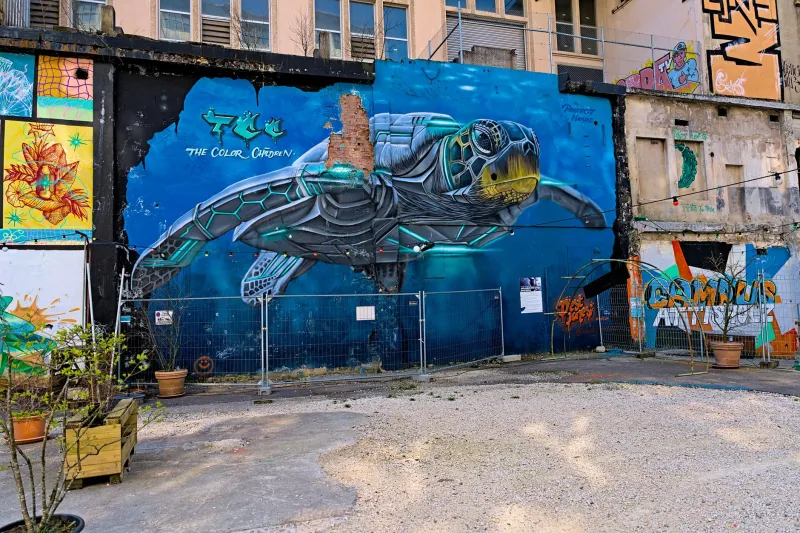
Here's a truth nobody in city hall likes to say out loud: a mural is only worth what somebody with power says it's worth. Not beauty. Not history. Not the ten thousand hours the artist bled into that wall. Power.
And in American cities right now, that power is being exercised — quietly, in zoning meetings and nonprofit boardrooms — over some of the most important public art this country has ever produced.
Two Walls, Two Very Different Fates
Take Philadelphia, a city that turned mural-making into civic identity. When developers come knocking on a block anchored by a beloved wall, there's an infrastructure ready to fight back: Mural Arts Philadelphia, decades of relationships, donors who pick up the phone. Restorations get funded. Walls get worked into new construction plans. The art survives because somebody organized to save it.
Now go to any fast-gentrifying neighborhood in Detroit, Miami's Wynwood fringe, or the mission-adjacent blocks of Los Angeles. Walls that defined a community for twenty years come down with zero ceremony. Sometimes the artist finds out from a tag on Instagram — a fan photographing the rubble.
Same country. Same art form. Wildly different outcomes.
The Math Nobody Wants to Do
Restoring a mural isn't romantic. It's anti-fouling coatings, UV-resistant sealants, scaffold rentals, and a conservator who knows how to match twenty-year-old spray pigment. A serious restoration can run anywhere from $15,000 to well past six figures for a large-scale wall.
Compare that to the cost of demolition, which is essentially zero — often the developer is paid to clear the site.
So when a mural's fate hangs in the balance, the question is never really "is this art worth saving?" It's "does anyone have the money, the legal standing, and the political will to make saving it cheaper than erasing it?"
That's why preservation is a power question. Community groups without lawyers lose. Neighborhoods without a nonprofit umbrella lose. Artists who never registered copyright on their designs lose hardest of all — because legally, in many cases, they can't even stop their own work from being painted over.
The Copyright Card Almost Nobody Plays
Here's the part that surprises people: under the Visual Artists Rights Act, artists of recognized stature can sometimes block destruction of large-scale works. It's been invoked in real cases — most famously when a developer in New York faced federal litigation over whitewashed 5Pointz, and a jury handed the artists a multi-million dollar judgment.
But VARA is a blunt, clunky tool. It requires the artist to be famous enough, the work to be recognized, and the artist to have legal standing — none of which applies to the kid who painted the mural that made their block famous.
So the law protects the top of the pyramid. Everyone below it relies on goodwill. And goodwill doesn't stop bulldozers.
Who's Fighting Back
The encouraging news: people are learning the playbook. Local arts councils are negotiating mural easements into development deals before the ink dries on the property sale. Cities like Denver and Chicago have started cataloging public art the way they catalog historic buildings — because you can't defend what you never documented.
Artists themselves are adapting too. Digital archives, high-res photo documentation, and contract clauses requiring relocation or restoration are becoming standard practice for muralists who've watched too many walls vanish.
It's not a solution. It's a seat at the table.
The Wall Is Never Just a Wall
A mural is a neighborhood's autobiography written in paint. When we let the market decide which chapters survive, we get a history book edited by rent prices.
The writers who came before us understood that the wall talks back. Maybe it's time the rest of us listened — and started fighting for the walls worth keeping before the buff truck rolls up.