Meet the Machines That Never Sleep: How Industrial Buffing Is Outpacing the Writers
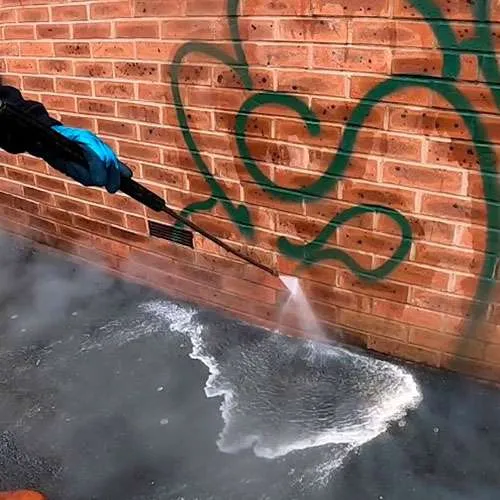
Photo: pressure washing graffiti removal city wall, via surfacepro.ca
The wall doesn't stand a chance. One minute it's a burner — six colors, wildstyle lettering, a skyline of drips down the lower third. The next, a truck-mounted rig rolls up, a chemical foam blankets the brick, and by the time most of the neighborhood is pouring coffee, the wall is gray again. No buff crew. No rollers. Just hydraulics and chemistry doing in eleven minutes what used to take a city worker an entire Saturday.
Welcome to the era of the buff machine.
The Arms Race Nobody Asked For
For decades, graffiti and its removal existed in a kind of gentleman's stalemate. Cities buffed with rollers and cheap paint; writers went over it again a week later. The wall was a conversation, even if it was an argument.
That's changing. Municipal departments from Los Angeles to Philadelphia have started contracting industrial removal outfits armed with pressure-washing drones, heated solvent trucks, and automated scrubbing rigs that can clear a full city block overnight. The pitch to taxpayers is simple: faster cleanup, lower labor costs, blight off the books before it photographs well.
The result is a speed mismatch that veterans of the culture say is unprecedented. A piece that took a crew three nights to execute can be erased before anyone posts a photo of it finished. The improvisational archive — the accidental museum that every city's walls have always been — is being deleted at industrial tempo.
Inside the Cab
The operators themselves aren't cartoon villains. Talk to the men and women running these rigs and you hear something unexpected: ambivalence.
One removal tech we spoke with in the Midwest, who asked not to be named because his company contracts with multiple cities, put it plainly. "Half the time I know whose work I'm washing off. I've seen the same tag for ten years. Some of them I respect. It's a job, but I'd be lying if I said it doesn't feel weird sometimes."
That ambivalence runs through the industry. Removal crews work on the same night schedule writers do, and some quietly photograph what they erase — a personal archive of work that officially never existed.
The Memory Problem
Here's the uncomfortable math. Historically, graffiti survived long enough to matter: a burner might stand for months, long enough to influence other writers, get photographed, enter the culture's oral history. The buff was slow, and slowness created canon.
Automated erasure collapses that window. When walls die in hours instead of weeks, the photographs become the only record — and photography favors whoever has a drone, a following, or a scanner parked outside the freight yard. Critics argue that speed-erasing doesn't just clean walls; it decides, algorithmically and mechanically, which art gets to have existed.
Urban historians point out that cities have always been selective about what they preserve. A century-old ghost sign gets a historical marker. A five-year-old mural gets a solvent truck. The difference now is that the selection happens before the public ever weighs in.
Is There a Truce Coming?
Some cities are experimenting with designated legal walls and mural districts, betting that sanctioned space will slow the arms race. Writers are skeptical but not dismissive. The culture has always adapted — to the buff, to the internet, to the market. It will adapt to the machines too.
But adaptation has a cost. When the walls themselves stop being the memory, the culture migrates somewhere else entirely. And a city that erases its walls that fast might find, years from now, that it erased something it didn't mean to: the only honest public art record it ever had.
The buff machine never sleeps. Neither, increasingly, do the people trying to outrun it.