The Last Witness: Meet the Photographers Who Bury Graffiti in Hard Drives Instead of Cemeteries
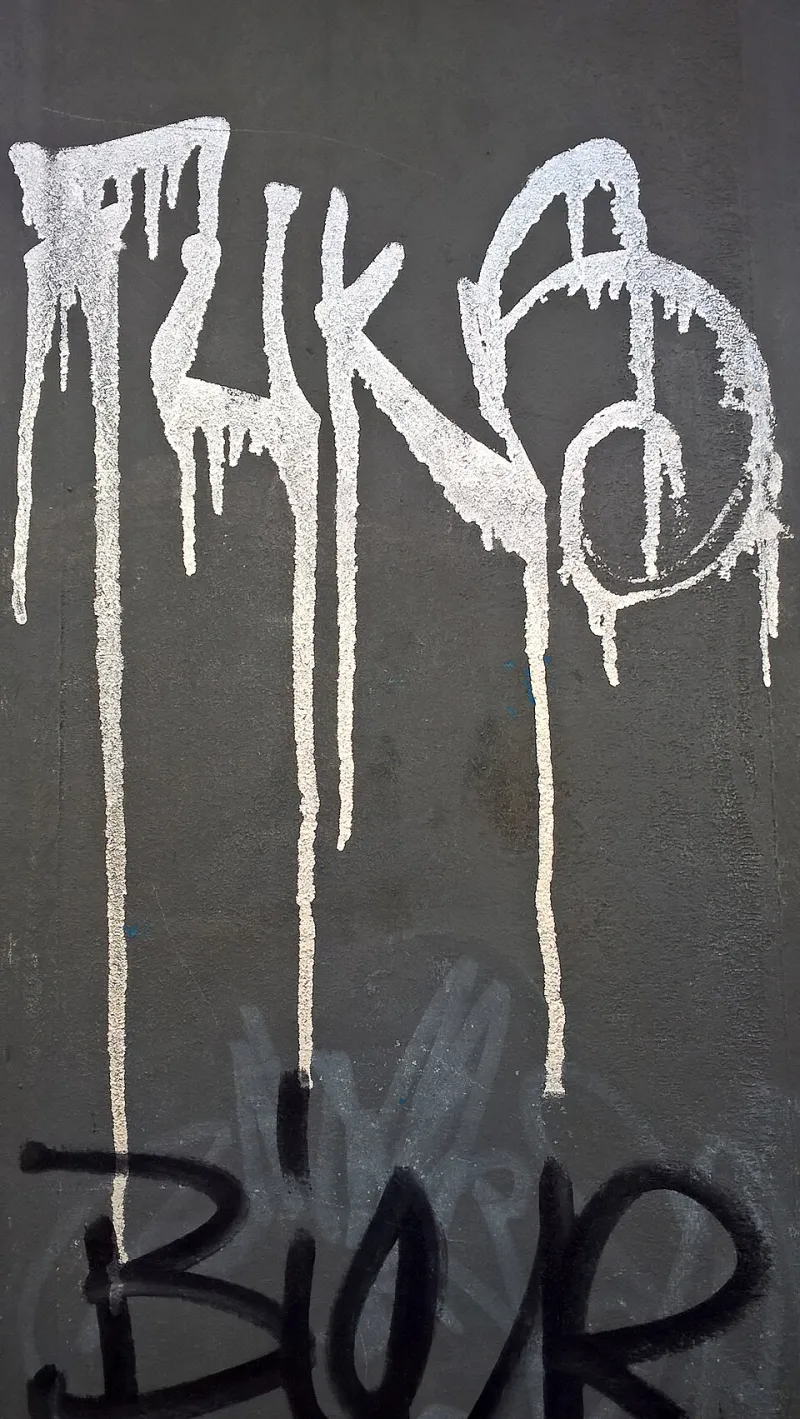
Photo: Lupus in Saxonia, CC BY-SA 4.0, via Wikimedia Commons
The text message came in at 6:47 on a Tuesday morning. A friend of a friend, someone who knew someone on the yard crew: the wall's coming down today. You've got maybe three hours.
Marcus — not his government name, and he'd want you to know that — was in his car by 7:15, camera bag in the passenger seat, driving toward a decommissioned water tower on the edge of Queens that held one of the most photographed burners in New York history. Except it wasn't photographed. Not properly. Not with the right lens, the right light, the right angles.
By noon, the tower was rubble. By 1 p.m., Marcus's memory cards held the last complete visual record of a piece that took five writers three nights to paint.
"That's the job," he told me over cold coffee in a Bushwick diner. "I'm not an artist. I'm a coroner. I document things right before they die."
The Wall Is a Deadline
Here's the thing about graffiti that outsiders never quite get: the art is designed to disappear. Paint over steel, concrete, and brick isn't permanent — it's the opposite. A masterpiece can be buffed by a city contractor, painted over by a rival crew, or swallowed by a condo development before the weekend's over.
That impermanence created a strange, essential profession: the graffiti photographer. Not the tourist snapping a mural for Instagram, but the documentarian who treats every wall like it's already gone. Because it is. It's always already gone.
The best of these photographers work like forensic teams. They shoot in raw format. They capture the piece from multiple distances — the full wall, the details, the drips, the handstyle on the tag beside it. They note locations, dates, sometimes the writers involved. Their hard drives aren't photo collections. They're archives of an art movement that refuses to hang its work in museums.
Twenty Years in a Fireproof Box
Walk into the home studio of just about any veteran graffiti photographer in America and you'll find the same setup: redundant drives, cloud backups, and increasingly, conversations about what happens to all of it.
Because here's the question nobody in the culture likes to ask out loud: when a photographer dies — or loses interest, or loses the drives in a house fire — what happens to the record?
Some archives have landed in university collections. Others sit in storage units, unpaid and forgotten. A few photographers have started donating their catalogs to digital street art databases, ensuring that a burner painted in a South Bronx rail yard in 1998 can still be studied by some kid in Houston who wasn't born yet.
And then there's the delicate business of what happens when a writer dies. Memorial walls get painted, sure — the culture's own form of gravestone. But the photographer's archive becomes something else: the definitive record of a life's work. Families have reached out to photographers after losing a son or daughter who wrote, asking for every image of their child's name on a wall. Those hard drives become the only biography that exists.
Did the Camera Eat the Wall?
There's a debate simmering in the culture, and it's worth taking seriously: has the photograph replaced the piece?
Old-school writers will tell you the photo was always secondary — the reputation was built on the wall itself, seen in person, felt at 3 a.m. with a can rattling in your hand. The picture was a receipt, nothing more.
But younger writers grew up on image feeds. They know most people will only ever experience their work through a screen. So pieces get painted for the camera — compositions that photograph well, color palettes optimized for a phone screen, spots chosen partly for how they'll look framed by the viewfinder.
The photographers sit in an uncomfortable middle. Some lean into it, essentially co-authoring pieces by advising on how they'll shoot. Others bristle at it, insisting they're documentarians, not collaborators. Almost all of them, though, share the same quiet pride: they know something the wall doesn't.
The wall thinks it's permanent. The photographer knows better.
The Archive Is the Art Now
Marcus, the guy from the water tower, has been shooting for nineteen years. He estimates he's documented over 14,000 pieces, maybe 90 percent of which no longer exist in physical form. When I asked him if that made him sad, he laughed.
"Sad? Man, that's the whole point. A gallery painting lasts a hundred years. A graffiti piece lasts until Tuesday. Somebody's gotta be the memory."
He paused, then added the line that stuck with me:
"The writers make the art. But we make it last. That's not the same thing, but I'd argue it matters just as much."
Somewhere in America right now, a buff truck is rolling toward a wall that deserves to be remembered. And somewhere else, a photographer is setting an alarm for 4 a.m., checking batteries, and driving toward the same wall — hoping to get there first.
The wall won't win. It never does.
But the photograph? The photograph doesn't buff.