Ink Before Aerosol: Inside the Sacred Sketchbooks Where Graffiti Is Really Born
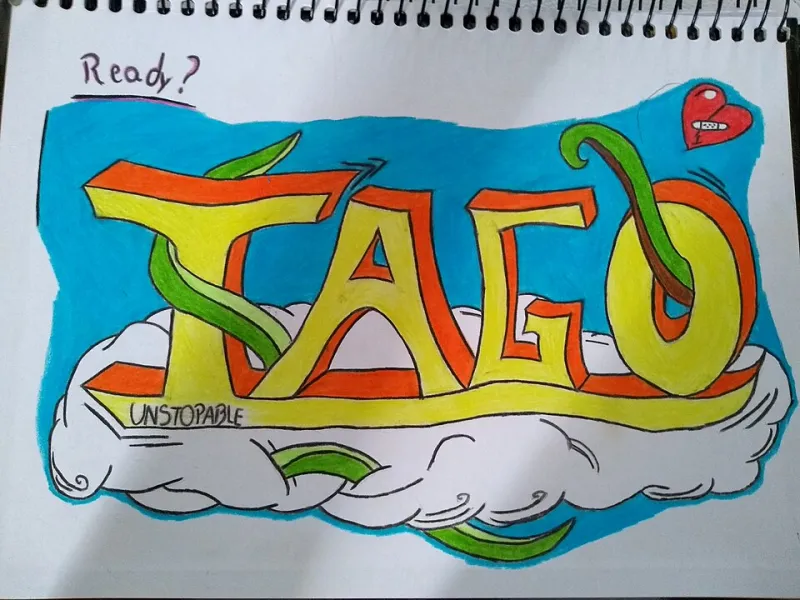
Photo: Iago Gutjahr, CC BY-SA 4.0, via Wikimedia Commons
Before there's a wall, a freight, or a rooftop spot scouted at 2 a.m., there's a notebook. Dog-eared, paint-stained, maybe smelling faintly of marker fumes — the blackbook is where every writer's name actually gets built.
Ask around any crew in New York, Philly, or the Bay and you'll hear the same thing: the book is the real archive. Walls get buffed. Trains get scrapped. But the pages? Those last forever.
What Exactly Is a Blackbook?
At its simplest, it's a sketchbook. But in graffiti culture, the blackbook — sometimes called a "piece book" or "writer's bible" — is something closer to a personal museum. Inside, writers sketch letterforms, experiment with wildstyle extensions, trade handstyles with friends, and collect "piece ins" from other writers they meet along the way.
The name comes from the old days when writers used black-bound composition notebooks or hardcover sketchbooks. Decades later, the tradition holds. A well-worn book passed around a crew is a living document — a map of a writer's growth, friendships, and grudges, all in ink.
"My first book had a cover held on with duct tape," says a writer from Chicago who asked to go by their tag only. "Inside, my letters were garbage. But flip to the last page and you can see exactly when things clicked. That progression — you can't fake it, and you can't digitize it."
Why Paper Still Wins in a Digital Age
Here's the tension: the feed can show you a finished mural in seconds, but it can't show you the twenty failed drafts behind it. The blackbook is where those failures live, and that's precisely the point.
Writers describe the practice as meditative. No algorithm, no likes, no audience. Just a pencil, a ruler, and the slow work of figuring out how your name should move. Bar connections, letter spacing, drop shadows — these decisions get made hundreds of times on paper before a writer ever loads a can.
There's also the social ritual. Exchanging books — letting another writer sketch in yours, and leaving a piece in theirs — is one of graffiti's oldest forms of networking. A blackbook with ins from established writers is basically a resume written in ink.
The Book as Archive
For older writers, blackbooks double as time capsules. Flip through one from the '90s and you'll find faded handstyles from writers who've since passed, pieces from crews long dissolved, phone numbers scrawled in margins from an era before DMs.
That archival weight is why some writers treat their books almost religiously. They don't leave them at the yard. They don't let just anyone touch them. Some scan every page as insurance against fire, water damage, or worse — a book getting lost in the mail during a trade run.
"People ask why I still carry a book when I could sketch on a tablet," one Los Angeles writer told us. "Because when I'm gone, my niece isn't going to scroll through my cloud storage and feel anything. She's going to open this book and see my whole life in letters."
Starting Your Own Blackbook Today
Good news for beginners: the barrier to entry is basically zero. Here's how writers recommend getting started:
- Pick a hardcover sketchbook with thick paper. Cheap pages bleed under marker. Brands like Molotow, Copic, and even a solid Strathmore mixed-media book are popular in the US scene.
- Commit to your name early, but loosely. Your tag will evolve. Sketch it in as many styles as possible — that's how you find what's yours.
- Practice handstyles daily. Old-school writers say your tag is your signature and your handshake. Ten minutes a day with a basic chisel-tip marker does more than a month of occasional painting.
- Trade ins. Go to legal walls, paint jams, and community events. Ask writers you respect to sketch in your book. Most will say yes — the tradition runs deep.
- Date your pages. Future you will thank present you.
The Page Is the Practice
There's a reason the blackbook has survived sixty years of graffiti culture while everything else around it changed. Walls are temporary. Fame is fickle. But the quiet hours spent bent over a sketchbook — chasing a letterform until it finally looks like you — that's the actual craft.
The wall is the announcement. The book is the education.
So grab a marker, find a notebook, and start drawing your name badly. Everyone you look up to did exactly the same thing.