Crew Over Everything: The Unwritten Rulebook That Holds Graffiti Squads Together
Every crew has a constitution. It's just never written down.
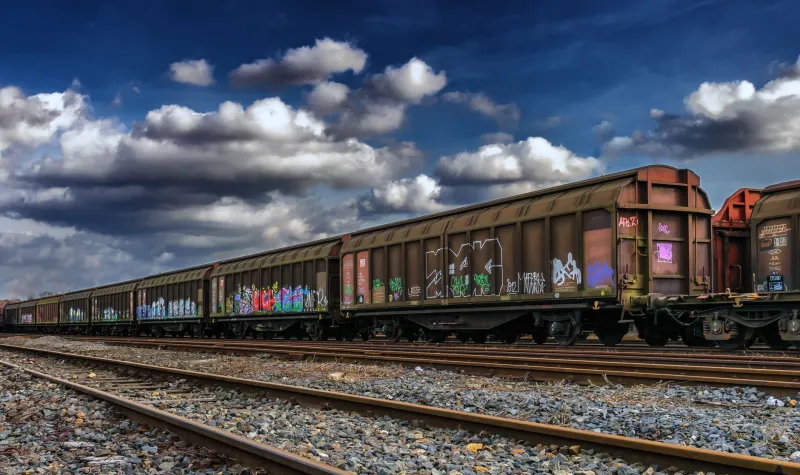
Ask a writer how their crew works and you'll get a shrug, maybe a laugh. Ask the wrong questions and you'll get silence. But spend enough time around freight yards in Chicago or rooftops in the Bronx and the code reveals itself — a set of rules older than most of the people following them, passed from king to apprentice like a family heirloom nobody admits to owning.
Getting Down Isn't a Formality
Nobody joins a crew. You get down, and the distinction matters.
The process usually starts with proximity, not paperwork. You paint next to the same people enough times, you catch the same cold cases, you show up when someone needs a lookout or a ride at 3 a.m. Reputation builds in the yard long before anyone says the crew name out loud in your presence.
"I painted with my crew for almost two years before I got the nod," says Relic, a writer who came up on East Coast layups and now paints legally full-time. "Nobody voted. One night my boy just asked if I wanted to put the letters up. That was the whole ceremony."
That's the thing — the invitation is the induction. No dues, no handshake. Just a name that now follows you everywhere, for better or worse.
The Name Outlives the Tag
Tags fade. Buffs eat pieces. But a crew name? That thing is load-bearing.
Crews function as reputational infrastructure. A strong acronym behind your tag tells other writers you've been vetted, that somebody vouched for you, that your work carries a co-sign you didn't paint yourself. It's why crews guard their initials like bank codes.
"Your crew name is your credit score," Relic puts it. "I've watched guys get free passes at walls because of three letters. I've watched other guys get crossed out on sight for the same reason."
Which is exactly why recruitment is slow. One bad apple with a camera roll full of everyone's work can end a crew that took decades to build.
Splitting the Paint, Splitting the Risk
Money talk in graffiti is awkward, so most crews develop their own economy without ever discussing it. The guy with the van doesn't always pay for the van. The one with the hookup on paint doesn't invoice anybody. It flows in a circle and evens out over years.
"Nobody keeps a ledger," says Dama, a retired writer from the Bay Area who now runs community mural programs. "But everybody knows who showed up with nothing. And everybody knows who showed up when it counted. Those are different things."
That second part — showing up — is the real currency. Paint is replaceable. A friend who'll sit on a dark wall at 2 a.m. waiting for the sound of footsteps is not.
Beef, Handled In-House
Writers are territorial and hotheaded. Fights happen. What separates functioning crews from crumbling ones is whether the beef stays internal.
The old-school protocol: crew leadership hears both sides, and the matter gets settled between writers — a one-on-one, sometimes literally a fistfight in a parking lot, done and dusted. What's forbidden is escalating it publicly: crossing out work, posting screenshots, or worst of all, involving police.
"We had two guys who genuinely hated each other," Dama recalls. "The heads sat them down, told them to settle it or leave the crew. They settled it. Both still paint. That's the system working."
The One Unforgivable Sin
Every code in graffiti circles back to a single commandment: you don't snitch.
Not on your crew, not on another crew, not on the kid you barely know who got caught. The logic isn't complicated — the entire culture runs on mutual vulnerability. Everyone at the wall is equally guilty. The moment one person can trade information for a lighter sentence, trust dies for everybody.
"I've seen whole crews dissolve over one phone call to a detective," says Relic. "Doesn't matter if the info was true. The suspicion alone is a cancer. Once people think you might talk, they stop painting with you, and then they stop painting around you, and then your name is just a warning."
Retaliation for ratting is one of the few areas where old-school writers and modern ones agree completely. Names get crossed out. Words get added to pieces. And in a culture that mostly communicates through paint, that's a death sentence in plain sight.
Why the Code Still Matters
Graffiti has gone semi-legit — commissioned walls, gallery shows, brand deals, festivals. But the crew structure persists because it solves a problem nothing else solves: how do you build trust in a world where everyone's technically breaking the law?
You build it the way families do. Slowly. With consequences. With names that mean something.
"People outside think it's a gang thing," Dama says. "It's not. It's closer to a guild. Apprenticeship, reputation, standards. The letters on the wall are just the receipt."
The paint buffs. The trains get scrapped. But the code, somehow, keeps getting repainted — one crew at a time.