No Boys Allowed: The Women Taking Back the Wall
Stand in front of a wall in Bushwick, Wynwood, or the Mission and look at who's actually up there. Slowly, stubbornly, the faces on America's biggest street art corridors are changing — and the women responsible aren't asking for permission.
If you're mapping a street art trip around the country, you're doing yourself a disservice if your itinerary skips the women's movement in graffiti. It's not a side story. It's the most interesting thing happening on the walls right now.
The Pioneers Painted Through It
Women have been writing since the earliest days of New York subway graffiti, but the history books mostly didn't bother to notice. Lady Pink was painting whole cars in the early '80s while being treated as a novelty act by the same press that canonized her male peers. Sandra Fabara — Lady Pink, to be exact — spent her career proving a woman could out-paint anyone in the yards, and still gets asked what it's like to be a female writer, a question her male counterparts never answer.
"The double standard was never subtle," says one West Coast muralist who came up in the 2000s and asked not to be named. "Guys got judged on their letters. We got judged on whether we were someone's girlfriend, whether we were 'serious,' whether we looked the part. My hand style could be fire and someone would still ask if my boyfriend taught me."
That pattern — competence questioned, appearance scrutinized, contributions footnoted — defined the scene for decades. And yet the women kept painting anyway, in freight yards and rooftops and tunnel systems, building a parallel canon the mainstream ignored.
The All-Women Jam Changes the Math
What's different now is infrastructure.
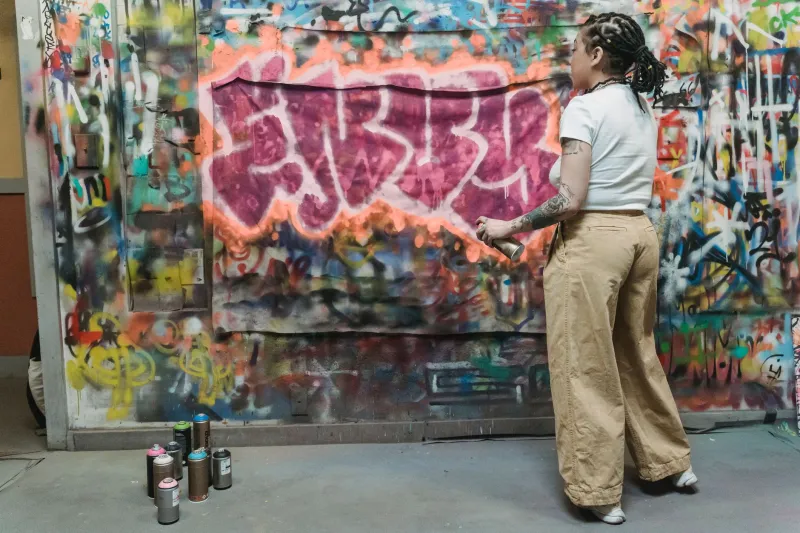
Across the US, all-women paint jams have become the movement's engine room. Events like the long-running dames-and-divas style jams in Oakland, women-centered walls at Houston's and Miami's festival seasons, and informal meetups organized in group chats have created something the old scene never offered: spaces where women hold the wall, run the lifts, and control the color palette without negotiating for it.
The effect compounds. Young writers see twenty women painting in one lot and the "there's no other girls" excuse dies on the spot. Organizers trade wall connections, paint sponsors, and legal permits. What used to be isolated becomes a network.
"The jam isn't about excluding anybody," the muralist explains. "It's about who's holding the spray can for once. You'd be amazed what happens to your confidence when nobody's mansplaining cap pressure at you all day."
Where to See It: A Women's Street Art Pilgrimage
For travelers, the movement is legible on the ground if you know where to look.
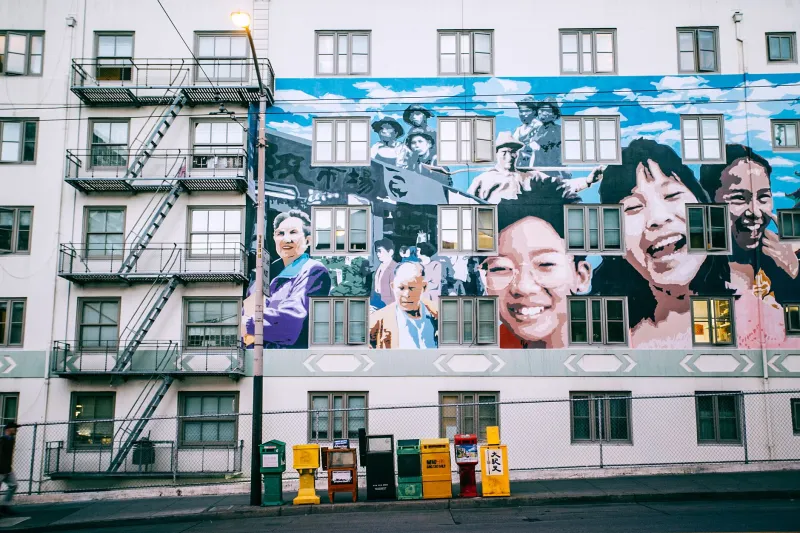
Los Angeles. The Arts District and the alleys off Melrose carry work from a deep bench of LA-based women muralists, and the city's mural program has increasingly commissioned them for large-scale legal walls. The scale here is the story — women getting the 60-foot building, not just the alley.
Miami. Wynwood's official walls still skew male, but walk the surrounding blocks during and after Art Basel season and you'll find women-painted murals that outdraw the headliners. The satellite jams are where the energy lives.
New York. The Bronx and Brooklyn remain the movement's spiritual home. Look for rotating legal walls along the waterfront and in community lots — the lineage from Lady Pink's era is direct and documented.
Chicago. Pilsen's muralscape includes a strong contingent of women street artists, many working at the intersection of graffiti and Mexican muralist traditions. It's arguably the most visually distinctive stop on the route.
Oakland. Ground zero for the all-women jam culture. The downtown corridors rotate work frequently, so check local street art maps before you go.
Flipping the Gaze
The sharpest thing about this generation of women writers is how they've weaponized the double standard against itself. Where the old scene judged them on looks, they've made boldness, color, and scale — qualities the boys' club dismissed as "feminine" — into signatures. Whole aesthetic movements in contemporary muralism trace back to work the gatekeepers waved off twenty years ago.
"We stopped trying to paint like the dudes to get respect," the muralist says. "The moment we painted like ourselves, the respect showed up. Turns out the wall doesn't care who's holding the can."
Neither should your itinerary.