Sanctioned Walls, Sanitized Culture? Inside America's Legal Graffiti Boom

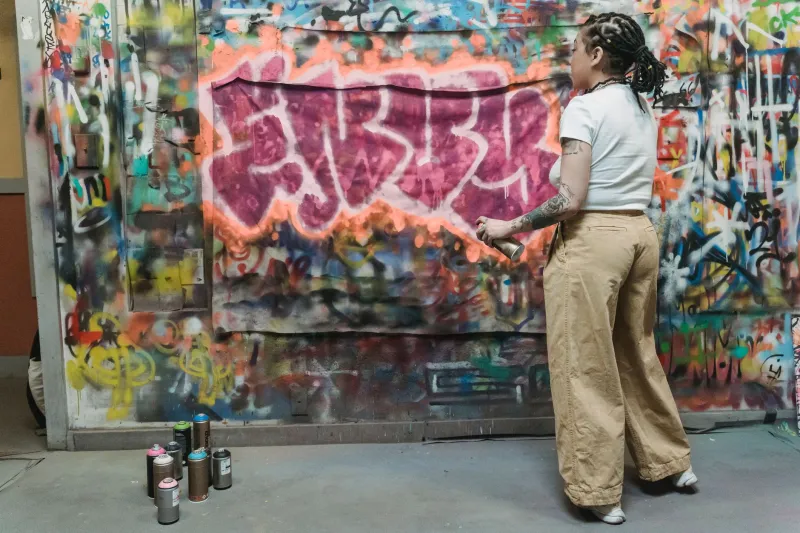
There's a spot in the Southwest — sun-bleached, gravel-crunching, walls stretching in every direction — where you can legally rack your can against concrete and paint until your fingers are stained every color on the shelf. No lookout. No running. No 3 a.m. adrenaline.
Depending on who you ask, that's either the future of the culture or the end of it.
Legal graffiti parks have exploded across the US over the last decade. And the debate over whether they actually work has gotten loud.
The Case For the Legal Wall
City officials, unsurprisingly, love them. The pitch is simple: give writers a sanctioned space, and the vandalism numbers drop. Give young artists a place to practice without a felony risk, and you build a pipeline of legitimate talent.
There's real evidence behind the logic. Organized programs — Philadelphia's mural efforts being the gold standard — have shown that when a city treats graffiti as an art form instead of a blight statistic, the whole ecosystem shifts. Businesses stop calling the buff line every morning. Kids who would've been catching cases start building portfolios.
For travelers, these parks have become destinations in their own right. Graffiti tourism is real — people plan road trips around spray-friendly lots in Nevada, Texas, and Arizona the way skaters once planned around famous plazas. Bring your own can, respect the rules, paint over yesterday's masterpiece. It's a living gallery that resets weekly.
The Case Against
Now talk to writers who came up in the yards and the tunnels, and you'll hear a different story.
The argument goes like this: graffiti was born illegal. The risk, the rush, the code of earning your name where you're not supposed to — strip that away and you've got something else entirely. A mural park with city signage and a donation bin isn't the culture. It's a petting zoo version of it.
There's a sharper critique too. Some writers see legal walls as a pressure valve — a way for cities to contain and monitor the scene while still buffing everything outside the fence. You can paint here, they say, as long as you never paint there. The rebellion gets zoned.
And honestly? Both things can be true at once.
What the People Running Them Say
Talk to park organizers and they'll tell you the goal was never to replace the culture — it was to give it room to breathe. Most legal walls run on shoestring budgets and volunteer labor. They host battles, mentor programs, and community paint days that put a spray can in the hands of kids who'd otherwise only ever see graffiti from a classroom window labeled "vandalism."
A lot of established writers quietly agree. The legend goes that everyone starts somewhere, and a legal wall is a hell of a lot better starting point than a courtroom.
The middle-ground position most veterans land on: legal walls are the doorway, not the destination. You learn can control, you build a blackbook, you meet crews. Where you go from there is between you and the culture.
So Do They Work?
Depends what you mean by "work."
If the metric is reduced vandalism, better community relations, and giving young artists a legal on-ramp — yes, the parks deliver, especially the ones with real programming behind them instead of just a fence and a prayer.
If the metric is preserving graffiti's outlaw DNA — well, nothing sanctioned was ever going to do that. And maybe that was never the parks' job.
If you're road-tripping, hit one. Bring paint, bring respect, paint over your spot when you're done. The walls don't care which side of the debate you're on. They just want to get painted.