Chasing the Buff: Inside the All-Night Race to Photograph Graffiti Before It Vanishes
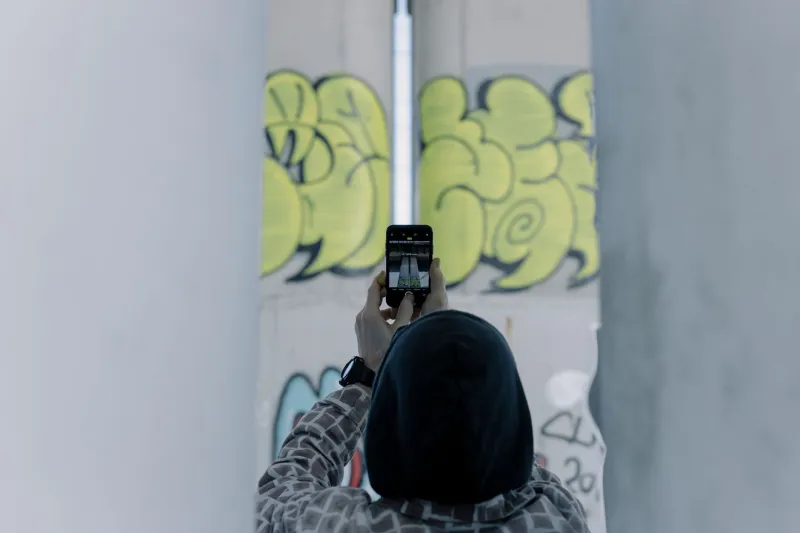
The text comes in at 11:47 PM: a location pin, a photo of a half-finished burner, and three words. "Buff truck spotted."
By 12:15, Marcus — he asked us to use just his first name, naturally — is parked across the street from a warehouse wall in a part of town the tourist maps skip. The piece is finished now, forty feet of color screaming off the concrete, and it might not exist by Friday. Maybe not by morning. He's got maybe twenty minutes of usable light from the streetlamp and a window before the paint's gone forever.
This is the night shift of street art. And without it, most of it never happened at all.
The Race Against the Roller
Cities don't announce when they're going to paint over a wall. Sometimes the buff crew shows up the night after a piece goes up. Sometimes a mural gets a stay of execution and lives for years. You never know — which is exactly why the photographers don't wait to find out.
The best of them work like storm chasers. They learn the rhythm of their city's graffiti abatement schedules. They know which neighborhoods buff fast and which ones let walls breathe. In Los Angeles, one photographer told us, the city's own mural ordinance creates weird pockets where legal walls survive and illegal ones vanish overnight. In Chicago, it's a different calculus entirely.
"You develop a sixth sense," Marcus says. "You see a fresh piece and your brain goes, okay — that's a Tuesday piece, that's got a week. That one over there? That's got hours. Shoot that one first."
Gear, Ethics, and the Location Question
The kit is unglamorous: a full-frame body, a fast prime lens for low light, a tripod that folds small enough to run with, and a headlamp with a red-light mode so you don't blind yourself adjusting settings in a dark alley.
But the gear is the easy part. The ethics are where it gets complicated.
The cardinal rule: never post a location. Ever. Geotagging a fresh piece is how you get it buffed in 48 hours — and how you get the writer heat if the spot was illegal. Serious photographers strip EXIF data, shoot landmarks out of frame, and answer "where is that?" comments with silence.
"You're not just taking a picture," one photographer explained. "You're the last witness. You handle it like evidence."
There are also rivalries — friendly and otherwise — over who shoots a spot first. Getting the first clean photo of a major piece is street cred in the archive world, and photographers have been known to race across town on tips. The etiquette, though, is clear: the writer always shares the final image first. Everything else is a supporting document.
The Archive Nobody Planned
Here's the twist: what started as hobbyist documentation has quietly become the historical record.
Municipal graffiti databases log complaints, not art. News coverage shows up only when there's a controversy. That leaves the photographers — and their hard drives — as the only complete visual history of an art form that's designed to disappear. Decades from now, when researchers want to understand the street art of the 2020s in American cities, they'll be looking at these archives: timestamped, location-coded (privately), and shot by people who were there at 2 AM because they heard a wall was coming down.
Some of the biggest archives have already outlived the walls they document. Whole bodies of work exist now only as JPEGs, the physical pieces long since rolled over in gray paint.
Why They Keep Riding
Ask any of them why, and you'll get a version of the same answer. The art is temporary. The photograph doesn't have to be. Someone should see this before it's gone — and if not them, then nobody.
"Half the pieces I've shot, the writer never even saw the finished photo," Marcus told us on the drive home, around 3 AM. "I send it to them later and they're like, man, I forgot that wall even existed."
He shrugged. "That's the job. Being the memory."
If you're planning a street art trip of your own, check out our guides to the underrated mural cities across the US — and remember the rule: look all you want. Never post the location.